
TRAINING : Dressage psychology with Luis Lucio - April 2026
Event Date:
April 11, 2026
Event Time:
8:30 am
Event Location:
Domaine de Malvies, Domaine de Malvies, Quarante, Occitanie, 34310, France
Event Description
ATTENTION: ALL EVENTS ARE CLOSING
THEIR RESERVATIONS 1 WEEK BEFORE THEIR START
Training is a demanding art where the harmony of the pair can quickly be lost when the desired results are achieved.
are done at the expense of the relationship and understanding of our expectations for our horse.
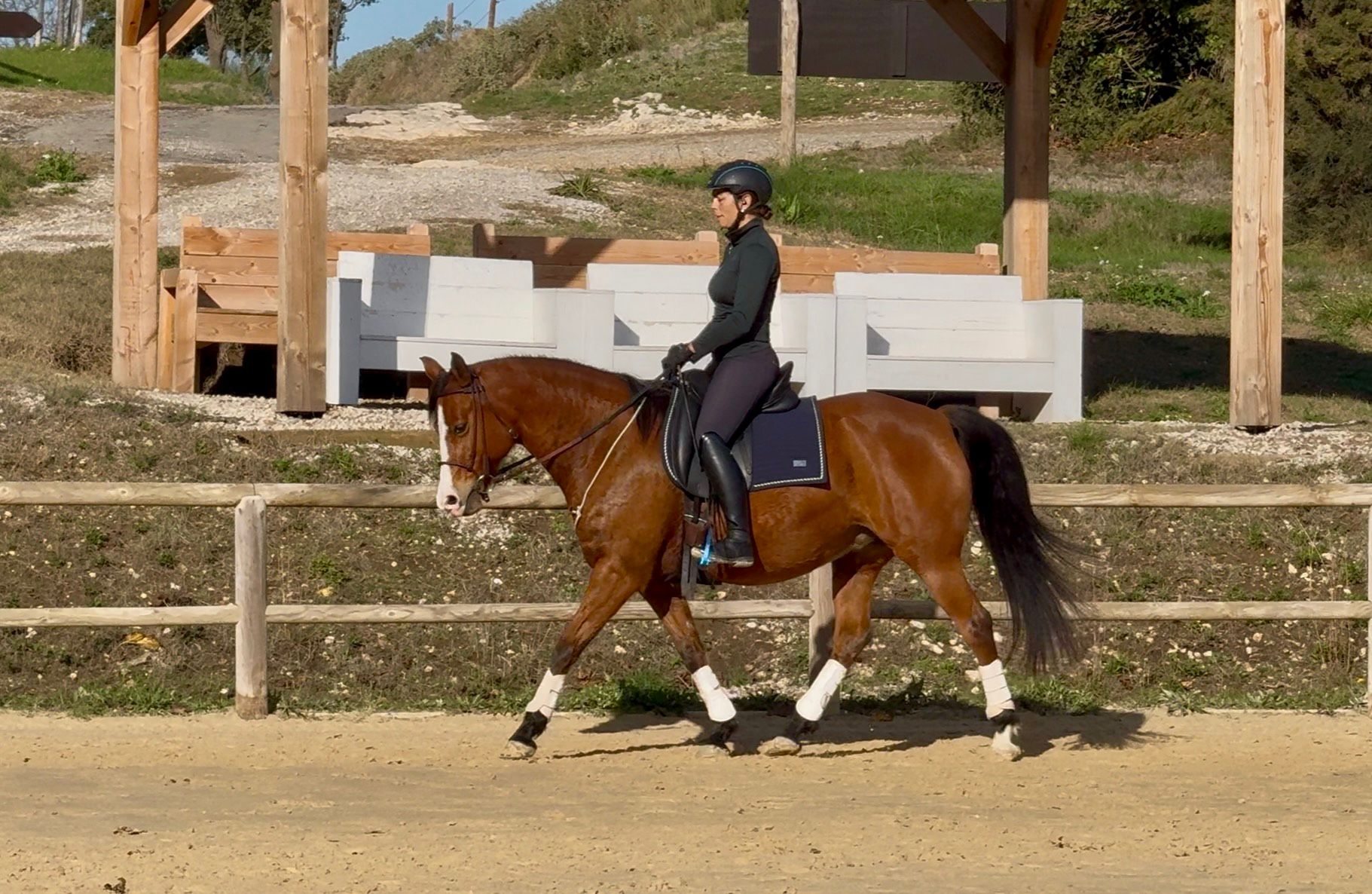
Three days of intensive training combining horsemanship, technique, and performance. Not just for your horse, but for you too. The key word in dressage: Precision – precision, and more precision.
WHO IS LUIS LUCIO?
- Olympic dressage rider and coach (Member of the Spanish team at the Atlanta Games in 1996, and at the Sydney Games in 2000)
- Master in high-performance sport
- Spanish National Dressage Coach 2013/2018
- FEI Coaches' Delegate 2014-2018
- Lead coach for young Spanish dressage riders from 2018 to the present
Luis developed his training program based on psychological principles, striking a precise balance between biomechanical requirements and the horse's cardiovascular fitness. As soon as the horses exceed a certain cardiovascular threshold, even at a walk, a break is necessary because excessive emotion hinders the horse's ability to perform brilliantly and at its peak.
Since 2023, Linda Parelli has been organizing with him not just private coaching, as he did until then, but a complete course combining exercises for the rider, study of videos and theory sessions to fully understand the balance and the scale of physical progression, then the performance warm-up on the ground (see the course of the same name in the Equideo online training), then the coaching of couples in small groups, and in particular in the saddle.
I personally met Luis during the very first Happy Horse instructor training course in Florida in December 2021. I invite you to discover Luis and his philosophy during this first Equideo workshop. The idea is to have ongoing support and progress.
«"All my life, I have been passionate about horses and dressage. I participated in my first national dressage competition as a rider in 1972, and I made my international debut at a FEI CDI in 1980. I rode myself and trained other riders up to Grand Prix level.
My two personal Olympic experiences as a rider — at the Atlanta 1996 and Sydney 2000 Olympic Games — gave me tremendous feedback on what we can do for horses, and how we should try to train them.
My daily devotion to horses for over 40 years has generated in me a great motivation to find the best approach, both ethical and technical, to work with horses and train riders within equestrian sport.
The knowledge and experience acquired during so many years of professional dedication, my relationship since 2000 with the Parelli program, my studies in High Sports Performance Master, my role as National Selector / Team Leader for all Spanish teams for a long time, as well as four years within the FEI Dressage Committee as a representative of the trainers, have offered me the privilege of obtaining a new and different vision of Dressage and the training of horses and riders.
I know that achieving a Grand Prix performance in a dressage career, with a willing and motivated horse — a true happy athlete — is a difficult dream to achieve.
I have been thinking about developing a system, keys to success, that includes at least the following five points:
⸻
1. A GOOD RELATIONSHIP WITH OUR HORSE
Trying to mold a horse's body before achieving a sound mental and emotional state is futile. It's impossible to have the body before the mind. Many do, and the emotional results are disastrous. We must develop the mind first.
⸻
2. CLEAR AND FAIR TECHNICAL PRIORITIES
Technical priorities are often difficult to establish, or we make the wrong choices.
We frequently give the horse too many messages at once — it cannot keep up or understand.
Good training involves choosing the right technical priorities for each horse and rider at the right time. Prioritizing what is most important to work on is a difficult task, often the defining quality of an experienced trainer.
A good trainer must set fair objectives for each stage of the work and strive to address them in the correct order. From this reflection, the "tactical approach" has developed.
⸻
3. AN EXPERT TACTICAL APPROACH
Managing pressure makes the difference between a horse progressing... or not.
The principle of pressure withdrawal, which teaches, is one of the keys to the horse's learning process.
Repetition can improve technical performance in some cases, but to what extent? Too much repetition creates fatigue, confusion, and demotivation. Deciding how much to ask, how many times, for how long, and when to stop is crucial, especially with high-level athletic goals.
Breaks and rewards during training sessions are great tools to help the horse understand and stay motivated. Regular breaks without any technical instructions from the rider (passenger mode, free stops, etc.) are incredibly helpful for the horse's mental, physical, and emotional recovery, and help it understand what it has just accomplished.
We spend more time in a dressage horse's life correcting past tactical errors... than improving its current technical level.
⸻
4. TRAINING ANALYSIS AND CONTROL TOOLS
Modern training must incorporate tools that help riders and trainers analyze and control their daily work.
The use of the heart rate monitor (HR) has traditionally been associated with conditioning work, common in disciplines such as racing, eventing or even show jumping.
Key areas in dressage — mental and emotional stability, central nervous system (CNS) stress and recovery — can also be studied through real-time heart rate monitoring, and help riders/trainers know “where” the horse is inside itself, especially with extremely obedient horses.
Technical skill demands such intense concentration that even the most adept riders at subtly interpreting body language can miss it. Assumptions will be confirmed… or refuted by the facts. Sometimes, all it takes is a glance at our wrist.
⸻
5. CONSTANT ADJUSTMENTS
Training requires a keen eye. This means that whatever our plan, we must be able to modify it if things seem to be going in the wrong direction. In elite sports, detailed plans are developed for every aspect of performance. But a good trainer must be able to read the situation and immediately adjust routines when necessary.
In dressage, we often follow patterns and habits that lead our horses into dead ends. Good training should move beyond automatic responses and help the horse understand the purpose of our work, establishing, each day, for each horse and each rider, the right decisions to make in order to achieve our long-term goals.»
WHO IS THIS INTERNSHIP FOR?
This course is for riders wishing to deepen their skills in riding, equine biomechanics, and communication, all while being mindful of their horse's emotions and body language. The goal is to develop subtle and effective communication by learning to decode the sometimes imperceptible signs your horse sends you. Even competitive training should aim for mental and emotional serenity for our horses. It is up to us to provide it.
This clinic is open to all riding styles (Western, trail, Portuguese, etc.) as long as you are looking to improve your communication and are willing to work on yourself. Because that's precisely what it's about: becoming more refined, more aware, and always more pleasant for our horse. This clinic is open to all levels: from discovering groundwork, learning to use a bridle and establish contact with the reins for young horses, to exploring Grand Prix movements.
Only a small group of participants is admitted. As a participant, you will be able to take part in simulations during the theory sessions, participate in discussions, and observe the transformation of horse and rider pairs over three days under the guidance of Luis Lucio. Luis comes to Equideo four times a year. His observations of the horse and rider pairs are invaluable each year.
WELCOME, THIS INTERNSHIP IS FOR YOU!!
INTERNSHIP ORGANIZATION
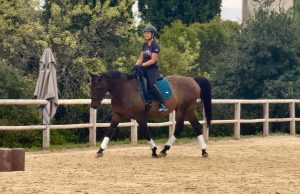
The training course begins each day at 8:30 am with your welcome at the barn. The instruction then starts with a review of how to structure a coaching session, followed by some theory and practical exercises from 9:00 am. Each rider receives individual coaching from Luis Lucio, first on the ground, then in the saddle, during 55-minute sessions, and then observes the other riders' sessions. This is the second year of coaching. All riders, regardless of their level, are welcome to join us, within the limit of the 8 available slots each day. To ensure continued progress and avoid repeating theory sessions, these have been recorded and are available within the Equideo online training program in "The Complete Equideo Program." Within the platform, request to join the group for the Training Courses with Luis Lucio. This will give you access to all the theory and fascinating coaching videos where Luis works with horses from the very beginning, and also coaches students through key moments. I highly recommend joining the platform beforehand so you can take the time to watch the theory lessons before your clinic.

Following Linda Parelli's Happy Horse program is, of course, a huge advantage, and this program is also available in "Equideo's Complete Guide." Luis's magic lies in his ability to coach you exactly where you are, pinpointing your primary needs as well as those of your horse to help you reach new levels of skill. You don't need to have a high level of technical expertise, but a strong and ongoing thirst for learning is essential. Luis likes to observe each rider's warm-up, both on the ground and in the saddle, to tailor the support he can offer you in the moment. If you're unfamiliar with his ground warm-up routine, he'll happily teach it to your horse first, and then to you.
Each subsequent rider must be ready 10 minutes before their start time.
Workshops are held every three months. If a workshop is already full, I highly encourage you to attend as an auditor, as the lessons you'll learn are so rich, powerful, and directly applicable. Reserve your spot as soon as possible after a new workshop is announced!
Meals are eaten together, and you can either bring your own picnic or choose the catered meal option. We work with an excellent caterer and offer a starter, main course, dessert, wine, and hot or cold drinks depending on the season for €35.
Numerous guesthouses are available in the area for your accommodation. Consult our FAQ for all the practical details.
It rarely rains here, but in case of severe bad weather forecast, we will go to a riding school 30 minutes away by van from Equideo.
You will receive your schedule during the week before the internship.
EQUIPMENT AND LOGISTICS INFORMATION:
Here is the equipment you will need:
- Helmet required, to be worn even when holding hands
- Gloves on the ground and in the saddle
- Flexible dressage stick 120 cm to 160 cm (depending on the size of your horse, to reach the thigh without having to move your hands from the contact of the reins)
- Phones must be on silent so as not to disturb the classes – Discussions between students must take place away from the quarry so as not to disturb the classes.
- Reins with stoppers to help with symmetry
- Clean boots or chaps and harness
- Rope halter, 3.7m round rope then 7m if you don't yet have a lasso, 10 or 14m flexible lasso
- Carrot stick & cord + 1 separate, clean cord used solely for rope riding
- A well-groomed and clean horse, with a neat and tidy coat (mane untangled, no manure or residual hay, braids as you prefer but not essential)
- Sometimes he'll use his heart rate monitor on the horse. Just FYI.
- I will also bring tempo monitors.
- Quarter sheet, drying blanket, fly mask, riding bonnet, in short everything your horse might need to be comfortable during the training course depending on the weather and temperatures (all our paddocks have shade without exception, and pergola-type shelters for the winter)Luis is particularly attentive to the fact that:
– Ride along precise directional lines, not just wander here and there on the track.
– Think about your objectives in advance. What would you like to learn in your 3 upcoming sessions during this course? If you don't know, think about “technique”, “posture”, ‘saddle technique“, ”hand positioning and use“, ”physical abilities“, ”behavioral improvement“, etc.
– If possible, don't ride close to the rail. The rail makes you think you're riding straight, but it doesn't improve your riding. Cones will be placed on the track.
– Development of ground skills for warm-up. We learn how to handle the lasso and have biomechanical theory sessions. Practical simulations are taught to everyone: tool handling, rein control,
– Stop your horse and keep the reins loose if you want to talk to Luis or anyone else; otherwise, concentrate and talk to your horse. Be aware of the impact your body and actions have on your horse's well-being.
– Control of speed and tempo, awareness of others in the arena are the main priorities.
“Giving the reins” isn’t just about putting your hand forward and quickly pulling back. It’s about «slowly stroking your horse with one hand,» which you do once to touch the neck, then give a rein and gently regain contact. To give the reins completely without contact, he says “long reins.”.

To get the most out of this training course, we invite you to discover the Happy Horse program now in the Equideo mobile app. The videos and lessons are in French (text and voiceover for the videos). Start using this program now for your training and daily life with your horse here: https://app.equideo.fr/
PRACTICAL QUESTIONS
Please see the FAQ at the bottom of the page. If you don't find the answer to your question, please email us at contact@equideo.fr
Ticket Options
